


In 2026, the stakes for organizational learning have never been higher. We are no longer designing simple “knowledge checks”; we are engineering high-fidelity, high-consequence simulations that prepare professionals for the unpredictable. Whether it is a surgeon using a haptic-enabled VR suite or a frontline manager navigating a de-escalation sandbox in Unreal Engine, the “Architect” behind the experience must be grounded in more than just software proficiency.
To build simulations that actually move the needle on behavioral change, your library must shift from “How to use Tools” to “How to Design for the Human Brain under Pressure.”
Here is the definitive Behavioral Bookshelf for the modern Instructional Architect.
1. The Behavioral Foundation: Talk to the Elephant (2025 Edition) by Julie Dirksen
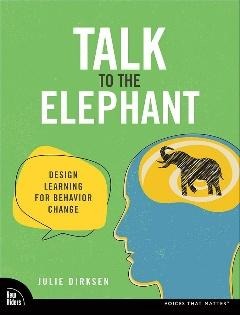
If there is one book that has defined the transition into the late 2020s, it is Julie Dirksen’s deep dive into the COM-B model (Capability, Opportunity, and Motivation). In high-stakes simulations, we often find that learners know what to do, but their “Elephant”—the emotional, instinctive brain—freezes under pressure.
Why it’s essential for 2026: Dirksen’s work provides the framework for analyzing why a behavior isn’t happening. In a simulation, if you haven’t accounted for the learner’s “Opportunity” (the environmental triggers) or their “Motivation” (the social or internal drive), the most photorealistic Unreal Engine environment will fail to produce results. This book teaches you to design for the gut, not just the head.
2. The Science of Immersion: Experience on Demand by Jeremy Bailenson
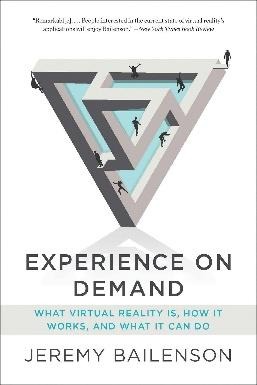
As Instructional Architects, we are now “Spatial Designers.” Jeremy Bailenson, the founding director of Stanford’s Virtual Human Interaction Lab, provides the psychological “operating system” for immersive simulations.
Why it’s essential for 2026: Bailenson explains the concept of Presence—the psychological state where the brain treats a virtual experience as a “real” one. For high-stakes training, this is the holy grail. This book helps you understand the “DICE” framework (Dangerous, Impossible, Counter-productive, or Expensive). It tells you exactly when to invest in a high-fidelity simulation and when a simple 2D approach is actually better.
3. The Design Philosophy: Map It by Cathy Moore
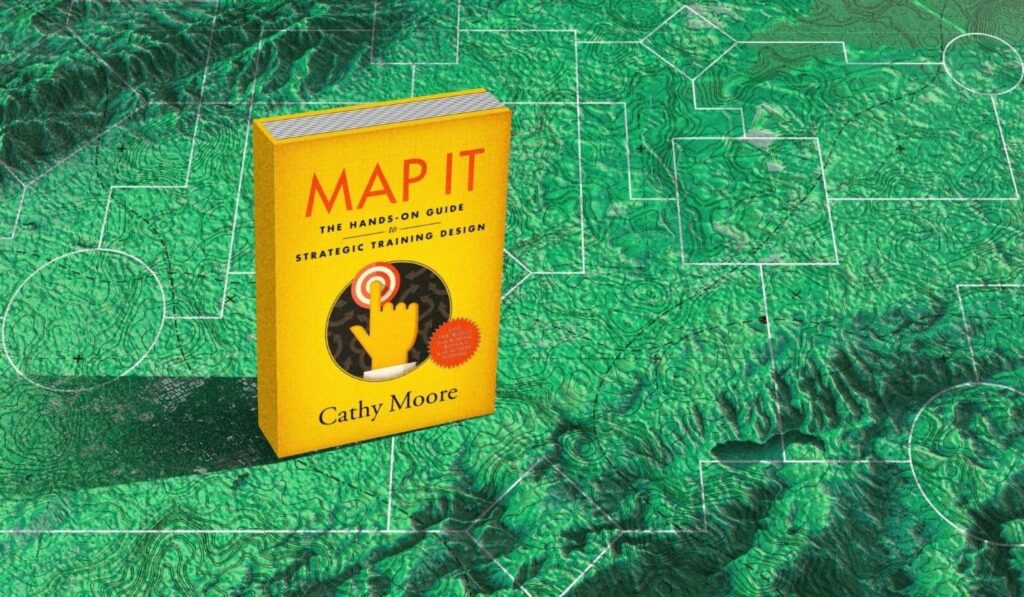
While originally published as a guide to “Strategic Training Design,” Moore’s Action Mapping has become the industry standard for scoping complex simulations in 2026.
Why it’s essential for 2026: In a sandbox environment like Unreal Engine, it is incredibly easy to get “lost in the weeds” of world-building. Architects often spend weeks designing 3D assets that have zero instructional value. Moore’s methodology forces you to start with a business goal and work backward to the specific actions required. If a virtual object doesn’t support a specific action that leads to the goal, it doesn’t belong in the simulation. It is the ultimate antidote to “content dumping.”
4. The Engineering Mindset: Digital Technologies in Behavior Science (2026 Release)
Edited by Darlene Crone-Todd and Donald Hantula, this brand-new 2026 release is the first to bridge the gap between Applied Behavior Analysis (ABA) and Real-Time 3D Engines.
Why it’s essential for 2026: This is the “technical” anchor for your shelf. It explores how digital technologies—specifically AI-driven NPCs and real-time physics—can be used to track Instructional Telemetry. For an ID with 7 years of experience, this book provides the language to talk to developers about “contingency management” and “feedback loops” within a 3D sandbox. It moves the conversation from “Does this look cool?” to “Does this data prove the learner is ready?”
5. The Cognitive Anchor: Make It Stick by Peter Brown & Henry Roediger
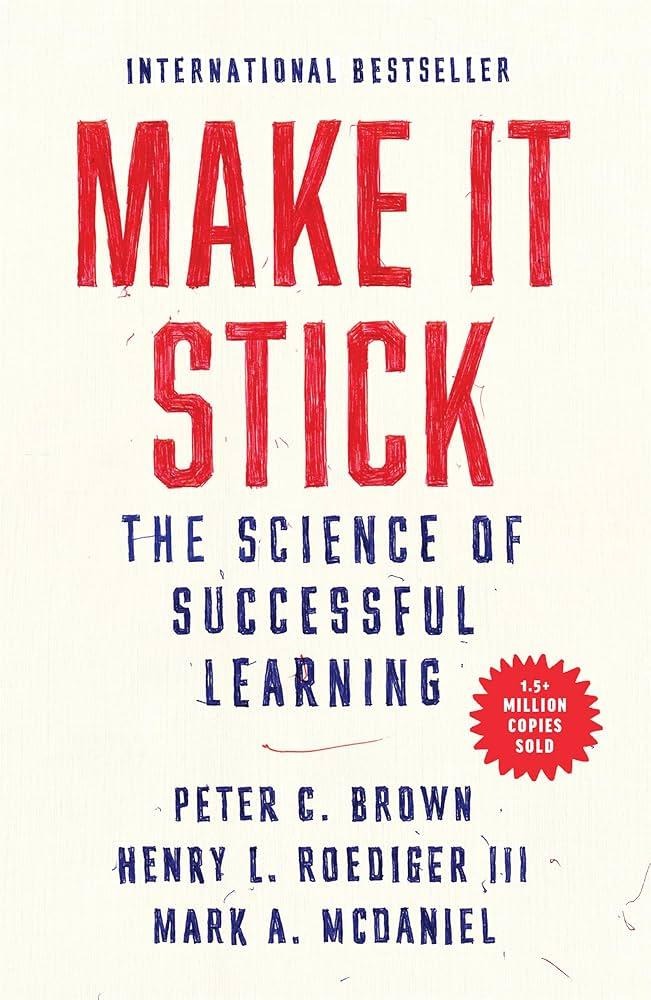
Despite being an older text, Make It Stick remains the most cited book in 2026 for a reason: it debunked “learning styles” and gave us Retrieval Practice and Spaced Repetition.
Why it’s essential for 2026: High-stakes simulations are, at their heart, about retrieval under fire. This book explains why “difficult” learning is better learning. When designing an Unreal simulation, you should use the principles in this book to build in “desirable difficulties”—randomizing challenges and forcing the learner to recall information in varied contexts. This ensures that the skills mastered in the virtual sandbox actually transfer to the real-world job site.
Strategy Comparison: Simulation vs. Traditional Instruction
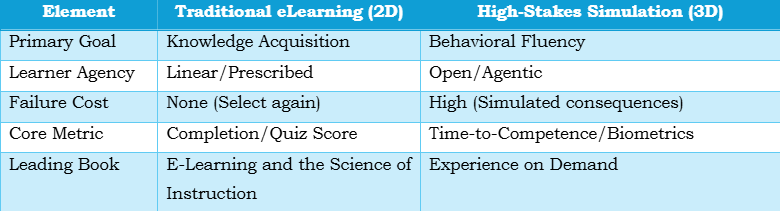
Summary: Building Your Intellectual Scaffolding
As a Senior Instructional Architect, your value lies in your ability to synthesize these different domains. You need the Strategic Scoping of Moore, the Behavioral Psychology of Dirksen, the Immersive Insight of Bailenson, and the Cognitive Rigor of Roediger.
When you sit down to design your next project in Unreal Engine, don’t just reach for the mouse. Reach for one of these texts. The most powerful tool in your 2026 toolkit isn’t the GPU in your workstation—it’s the mental model you use to design the experience.