


To thrive as an Instructional Designer in 2026, you must navigate a landscape where cognitive science meets real-time technology. The “standard” texts of the past are now being supplemented by works that address spatial presence, agentic AI, and behavioral architecture.
Here is a curated selection of the five most impactful books for the modern Instructional Architect.
1. The Behavioral North Star: Talk to the Elephant (2025 Edition)
Author: Julie Dirksen
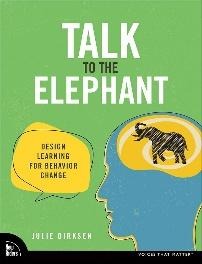
While Dirksen’s Design for How People Learn is the classic introduction, her recent deep dive into behavior science, Talk to the Elephant, is essential for the 2026 practitioner.
The Core Insight: We often design for the “Rider” (the logical brain) while ignoring the “Elephant” (the emotional, impulsive brain). This book provides the COM-B model framework to diagnose whether a performance gap is caused by a lack of Capability, Opportunity, or Motivation. For anyone designing soft-skills simulations, this is the manual for moving from “knowledge” to “action.”
2. The Simulation Blueprint: Action-First Learning (2025)
Author: Karl Kapp
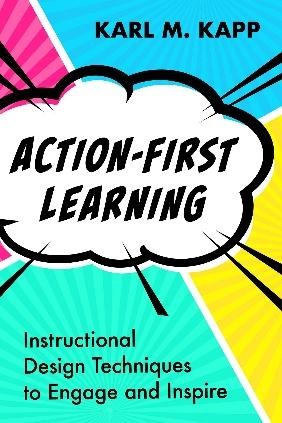
As Unreal Engine becomes a staple in high-stakes training, Karl Kapp’s Action-First Learning has become the definitive guide for “Sandbox” design.
The Core Insight: Kapp argues that engagement is not a “layer” you add at the end; it is built into the verbs of the experience. He moves designers away from the “Content-Presentation-Quiz” cycle and toward an “Action-Consequence-Feedback” loop. If you are struggling to adapt ADDIE for a 3D environment, Kapp provides the cognitive scaffolding to ensure your high-fidelity world remains a high-impact learning tool.
3. The Strategy Manual: Map It
Author: Cathy Moore
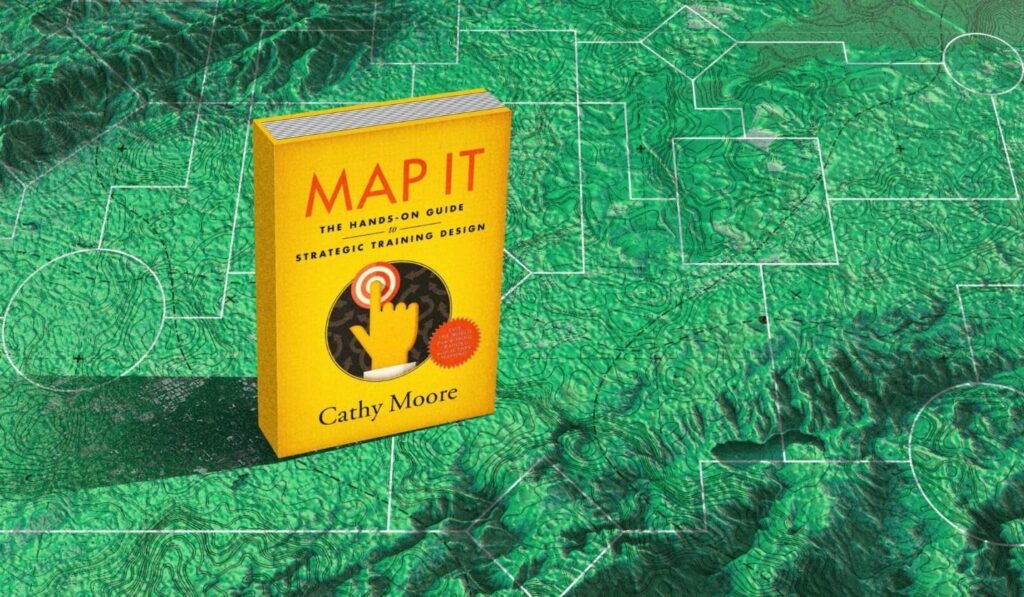
In an era of “information overload,” Cathy Moore’s Map It remains the most powerful defense against “content dumping.”
The Core Insight: Using Action Mapping, Moore teaches designers to start with a measurable business goal rather than a topic. This is particularly vital in 2026, where the cost of 3D asset development is high. Map It ensures you only build what is necessary for the learner to do the job, effectively serving as a filter that aligns instructional architecture with corporate ROI.
4. The Human-AI Partnership: Parter with AI for Instructional Design (2025)
Author: Michelle Lentz
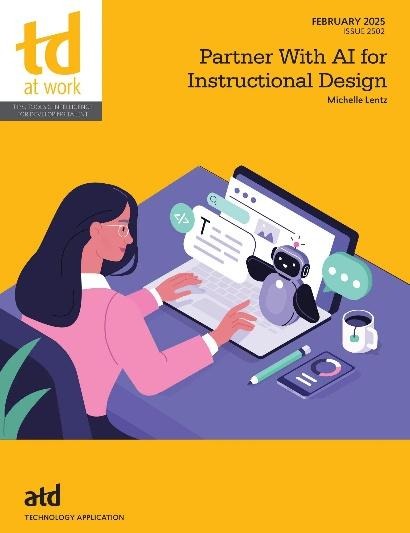
As we enter 2026, AI is no longer a “tool” but a “co-pilot.” This book (and similar 2025 releases) focuses on the Agentic Shift—moving from using AI for content creation to using AI to create adaptive, personalized learning journeys.
The Core Insight: It explores the ethics and architecture of Human-in-the-Loop design. It teaches you how to use Large Language Models (LLMs) to power MetaHuman NPCs in Unreal Engine, allowing for non-scripted, dynamic conversations that were impossible just a few years ago.
5. The Cognitive Anchor: Make It Stick
Author: Peter C. Brown, Henry L. Roediger III, & Mark A. McDaniel
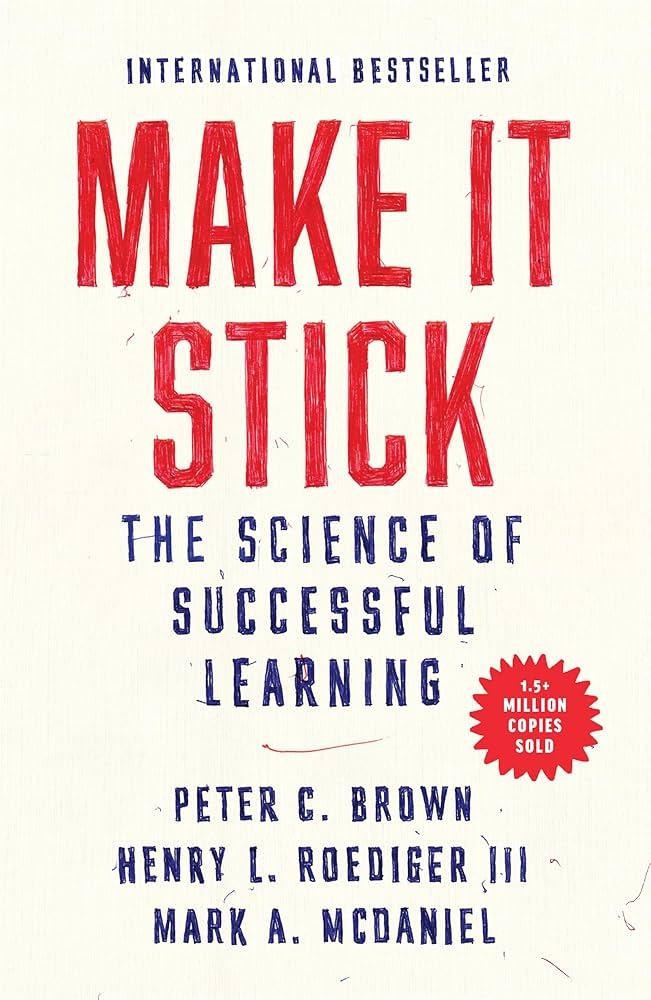
Despite being the oldest on the list, Make It Stick is the “Bible” of evidence-based design. In a world of “shiny” VR and AI, it tethers us to what actually works for the human brain.
The Core Insight: It champions Retrieval Practice, Spaced Repetition, and Interleaving. In 2026, we apply these by designing “desirable difficulties” into our Unreal simulations—forcing learners to recall skills in varied, high-pressure contexts to ensure that what happens in the virtual world actually transfers to the real one.
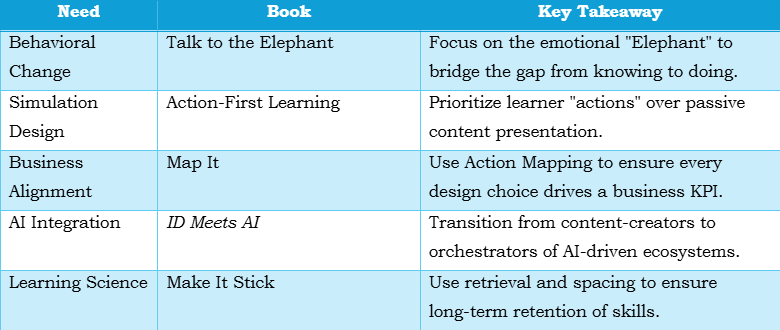
Summary of the 2026 Architect’s Bookshelf

March 29, 2026